Custom Website Versus Website Builder – Which Wins?
A website that looks acceptable on launch day can still hold a business back six months later. The real question in a custom website versus website builder decision is not which option is easier to publish. It is which option will present your business credibly, guide visitors towards an enquiry and support the way you want to grow.
For many small and medium-sized businesses, a website builder is a practical starting point. For others, particularly businesses competing in local search or relying on trust before a customer makes contact, a custom website provides a stronger long-term foundation. The right choice depends on your goals, your content and how much your website needs to do beyond displaying basic information.
What a website builder does well
Website builders provide pre-designed templates, drag-and-drop editing and standard features for pages, contact forms, galleries and basic online stores. They can be useful when a business needs a simple online presence, has a clear and limited range of information to publish, and is comfortable managing updates internally.
A builder can suit a new business that needs to validate an idea, a local club with occasional announcements, or a sole trader who only needs a short digital brochure. The structure is already there, so decisions about layout and functionality are reduced.
That convenience can also create a constraint. Your business is shaped around the template’s available sections, styling rules and content options. If a template was designed for a generic audience, it may not reflect how your customers evaluate a plumber, legal firm, clinic, builder, retailer or professional service provider.
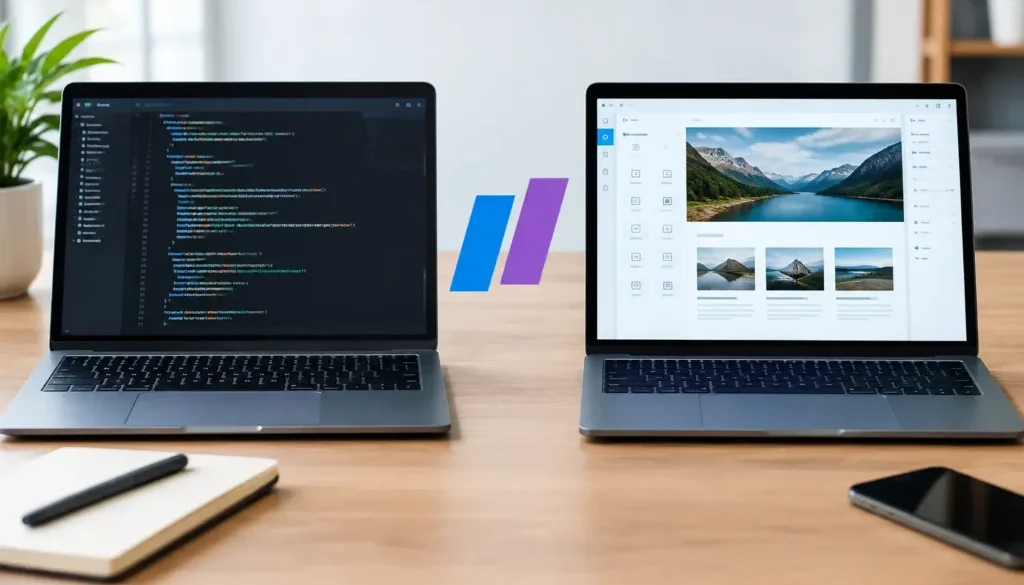
Custom website versus website builder: the practical difference
A custom website is designed around the business first. Its page structure, navigation, calls to action, written content, visual direction and technical setup are planned to help the right visitor take the next step.
This does not mean every element needs to be unusual or complicated. Good custom website design often feels simple because it removes friction. A visitor should quickly understand what you do, where you work, why they should trust you and how to contact you.
With a website builder, you generally begin with a layout and fit your business into it. With a custom website, the design begins with the customer journey. That difference affects more than appearance. It influences whether important service pages are easy to find, whether mobile users can act quickly and whether your site gives search engines enough clear, relevant information to understand your business.
Credibility is built in the details
Most customers will not compare your website against a design checklist. They make a fast judgement based on clarity, presentation and confidence. Outdated layouts, inconsistent spacing, generic imagery, unclear headings and buried contact details can make a capable business appear less established than it is.
A professionally designed website gives you control over the details that create trust. This includes service-specific page layouts, original messaging, professional photography or video placement, testimonials, project examples, qualifications, service areas and enquiry pathways that make sense for the business.
For a local service provider in Eltham or Melbourne’s north-east, credibility can be especially important. Customers often search with an immediate need and compare several businesses before calling. A clear website that demonstrates local knowledge and professional standards can help turn that search into an enquiry.
Search visibility needs more than a template
A template alone does not prevent a website from appearing in search results. However, visibility relies on the quality and structure of the content placed inside it. Search engines need clear service information, logical page hierarchy, useful headings, fast-loading pages and relevant local signals.
Custom website design makes it easier to plan these elements from the beginning. Instead of adding a service page as an afterthought, each core service can have its own purpose, messaging and opportunity to answer a customer’s questions. This creates a stronger base for ongoing SEO and Artificial Intelligence Answer Engine Optimisation (AIO).
Supporting services work best when the website is ready to receive the attention they generate. Google Business Profile activity, business listings, social media content and video can bring people closer to your business, but the website is where they decide whether to enquire. If visitors land on a vague or poorly organised page, the opportunity can end there.
Control matters as your business changes
Businesses rarely stay still. You may add services, expand into new suburbs, build a portfolio, introduce booking options, publish resources or need a more effective way to qualify enquiries. A website should be able to change with those requirements without becoming difficult to manage.
Website builders can become restrictive when a business outgrows the original template. New pages may look inconsistent, navigation may become crowded, and specialised features can force awkward workarounds. These issues are not always obvious at the beginning, but they become more noticeable as more content is added.
A custom site gives you a clearer framework for growth. It can be built with room for future service pages, location content, case studies, video, campaign landing pages and improved conversion features. The aim is not to add every possible feature from day one. It is to make sure the website can develop in a considered way.
When a website builder may be the right choice
A website builder is not automatically the wrong decision. It may be appropriate if your business only needs a temporary holding page, a simple event site, or a very small number of pages that are unlikely to change. It can also work for business owners who have the time and confidence to maintain content, imagery, mobile presentation and technical settings themselves.
Before choosing one, consider three practical questions. Will customers need detailed information before contacting you? Do you need to compete for local search visibility? Will your services, locations or content expand over the next few years?
If the answer is yes to one or more of these questions, a custom website is usually the more suitable platform. It gives your business a purposeful digital home rather than a standard template that has been adjusted to fit.
What to expect from a professional website design process
A good website project should not begin with colours and fonts. It should begin with understanding the business: the services that matter most, the customers you want to reach, the questions they ask, the actions you want them to take and the proof that builds confidence.
From there, the website can be structured around clear priorities. The homepage introduces the business and directs visitors to key services. Service pages provide useful detail. Contact options are prominent. Content is written for people first, while being organised in a way that supports discoverability.
NuDesign approaches website design as the foundation of a wider digital presence. SEO, AIO, business listings, social media and video can strengthen reach, but they are most effective when connected to a professionally built website that turns interest into action.
Choose the option that supports the next stage
The best website is not the one with the most features. It is the one that makes your business easier to find, easier to understand and easier to contact. If your website needs to generate trust and enquiries rather than simply exist online, build it around your business and the people you want to serve.