SEO vs Google Ads for Small Business: Which Wins?
A plumber in Eltham can appear in Google tomorrow with an ad. The same business can also earn unpaid search visibility for months or years through SEO. That is the practical choice behind SEO vs Google Ads for small business – immediate exposure or long-term discoverability. For most businesses, the better answer is not about choosing a channel in isolation. It starts with whether your website gives people enough confidence to make contact.
A well-designed website is where your ads, search rankings, Google Business Profile and social content all lead. If the site is slow, unclear, outdated or difficult to use on a mobile, neither SEO nor Google Ads will perform as well as they should. Visitors need to quickly understand what you do, where you operate, why they should choose you and how to enquire.
SEO vs Google Ads for small business
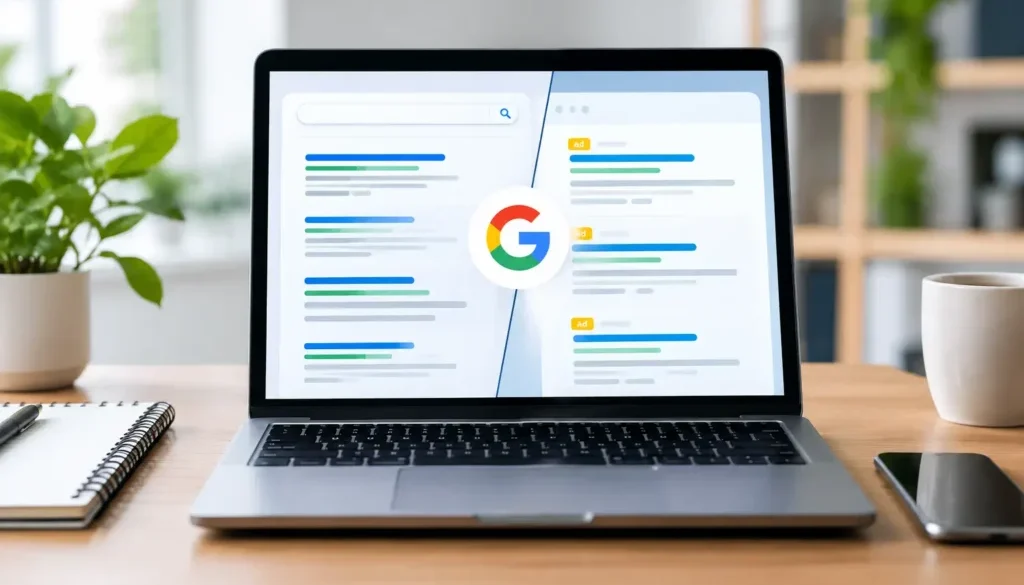
SEO and Google Ads put your business in front of people searching for relevant services, but they work in very different ways. Google Ads is paid placement. You create campaigns around particular search terms and your ad may appear when someone searches for them. SEO improves the relevance, quality and technical performance of your website so it can earn stronger visibility in organic results.
Google Ads can generate attention quickly. SEO generally takes longer because search engines need to crawl, understand and assess your website against competing pages. However, SEO creates a foundation that continues to support your visibility after each piece of work is completed, particularly when the website is kept current and useful.
Neither channel guarantees enquiries. The person searching, the local competition, the quality of the offer and the experience after the click all matter. A clear website with focused service pages will usually produce better results than sending visitors to a generic homepage.
When Google Ads makes sense
Google Ads is useful when a business needs to be visible for high-intent searches without waiting for organic rankings to develop. A local electrician, dentist, solicitor or retailer with a time-sensitive campaign may use ads to reach people who are actively looking for a solution.
The main advantage is control. Campaigns can target specific services, locations, search phrases and business hours. This makes it possible to test which services attract the right kind of enquiry. It can also help a new website gain early traffic while its SEO presence is still developing.
That speed comes with responsibility. Ads need active management, clear conversion tracking and carefully selected search terms. Broad targeting can attract irrelevant clicks, while a poorly structured landing page can waste the opportunity created by the ad. If someone searches for a particular service, the page they reach should speak directly to that service rather than making them hunt through a menu.
Google Ads is often strongest for businesses with an urgent, specific customer need. Think emergency repairs, appointments, consultations, seasonal services or a new service area. It is less effective when the website has no clear call to action, weak trust signals or no simple way to enquire from a mobile.
What an ad-ready website needs
An ad does not replace the website – it places more pressure on it. The landing page should load quickly, explain the service in plain language and make the next step obvious. Contact details, service areas, testimonials, qualifications and examples of work can all help reduce hesitation.
For a local business, consistency also matters. The business name, phone number, service information and location details should align across the website and business listings. This helps customers recognise they have reached the right business and supports a more credible digital presence.
When SEO is the stronger choice
SEO is a good fit when customers regularly search for your services and you want your website to become a reliable source of qualified traffic over time. It is particularly valuable for local service providers, professional firms, health and wellness businesses, hospitality venues and retailers that need to be found repeatedly in their area.
Effective SEO is not simply adding keywords to a page. It includes building a well-organised website, writing useful service content, improving page speed and mobile usability, setting up local business information correctly and demonstrating relevance to the places you serve. Search engines are trying to provide helpful answers, so thin pages written only to chase rankings rarely create a strong long-term result.
For businesses in Eltham and Melbourne’s north-east, local relevance can be a genuine advantage. A website should clearly explain its primary services and service area, but it should do so naturally. Adding a long list of suburb names to every page does not make the content more useful. Dedicated, relevant information about local services, projects or customer needs is more meaningful.
SEO also supports trust before a customer clicks. Appearing in organic results alongside an accurate Google Business Profile and a professional website reinforces that your business is established and easy to verify. This matters when a customer is comparing several providers for the same job.
SEO begins with website structure
A custom website provides the framework for sustainable SEO. Each core service needs a logical page, clear headings, useful copy and a direct enquiry path. Your navigation should make sense to visitors, while internal page relationships help search engines understand which services are most important.
Technical details matter as well. Search engines and customers respond better to pages that are secure, mobile-friendly, fast to load and free from broken pathways. Good website design brings these elements together with professional presentation. It is not just about looking polished. It is about making it easier for a prospective customer to take action.
Supporting work such as Google Business Profile management, business directory listings, content creation and AIO can extend that foundation. They should reinforce the same accurate message and lead people back to a website built to convert interest into an enquiry.
The real decision: speed, longevity and intent
If you need visibility for a specific service now, Google Ads may be the right immediate tool. If you want to strengthen your position for the searches customers make every week, SEO is the longer-term play. Many established businesses use both, with each channel doing a different job.
For example, a local landscaper might use Google Ads to promote a timely garden clean-up service while building SEO pages around landscape design, paving and ongoing garden maintenance. The ads can create near-term enquiries, while SEO develops broader visibility across the services that matter most to the business.
The key is to avoid treating ads as a fix for an underperforming website or treating SEO as a one-off task. Ads reveal what people search for and which messages prompt action. SEO turns useful insights into durable website content and stronger organic reach. Used together, they can make your digital activity more informed and consistent.
Choose based on your website’s current position
Before deciding where to focus, look at the experience your website currently provides. Can a visitor understand your service within a few seconds? Is each important service represented by its own useful page? Does the site work properly on mobile devices? Can you identify where enquiries come from and which pages encourage them?
If the answer is no, website design and content should come first. Driving more visitors to a confusing site rarely solves the underlying problem. Improving the foundation gives SEO more to work with and gives paid campaigns a stronger destination.
If the website is already clear and professionally presented, the decision becomes more specific. Google Ads can support immediate demand and testing. SEO can build lasting search visibility. The right balance depends on the services you want to promote, how people search for them and whether your website is ready to earn their trust.
A practical next step is to review your most valuable customer enquiries, then make sure the matching pages on your website answer those needs clearly. From there, choose the channel that helps the right people find those pages first – and keep improving the website that turns their visit into a real conversation.