Google Business Profile Optimisation That Drives Enquiries
When someone searches for a local plumber, café, accountant or clinic, they are often deciding who to contact before they visit a website. Google Business Profile optimisation helps put the right information in front of them at that moment – but it works best when it leads customers through to a professional website that confirms your credibility and makes enquiry easy.
For businesses in Eltham and Melbourne’s north-east, local visibility is rarely about one channel. Your Google profile, website, reviews, photos and directory listings need to tell the same clear story. A well-managed profile can generate calls, direction requests and website visits. A poorly managed one can send potential customers to a competitor, even when your service is better suited to their needs.
Why Your Google Business Profile Matters
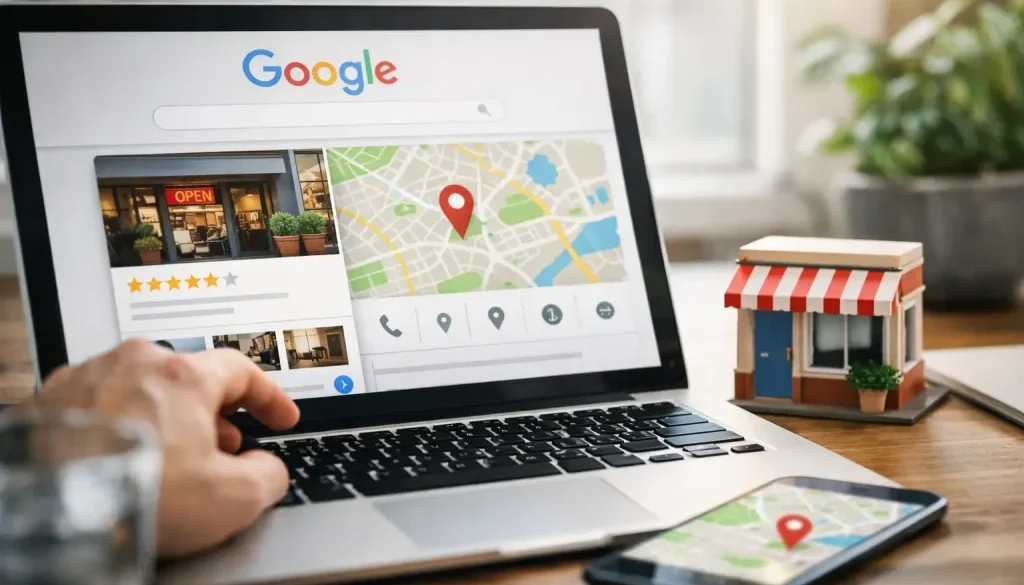
A Google Business Profile is the business listing that may appear in Google Search and Google Maps when people search for your business name, service category or nearby providers. It is often the first practical interaction a prospective customer has with your business.
They can see your business name, category, opening hours, phone number, reviews, photos, service area and website. That means incomplete details do more than look untidy. They create uncertainty. If a customer cannot quickly tell whether you service their suburb, offer the work they need or have a reliable website, they may simply keep searching.
The profile should not replace your website. Your website is where you explain your services properly, show completed work, demonstrate experience, answer customer questions and turn interest into an enquiry. Think of the profile as a highly visible local signpost. Its job is to provide confidence quickly and direct suitable customers to the next step.
Start With Accurate Business Foundations
Before adding posts or chasing more reviews, make sure the core listing is correct. Google relies on clear business data, and customers rely on it even more.
Your business name should reflect the name you use in the real world. Adding a string of suburbs or services to force visibility can create an unprofessional impression and may cause problems with Google’s guidelines. Use your genuine business name, then communicate services and locations in the appropriate profile fields and on your website.
Choose the primary category carefully. It tells Google what your business fundamentally does, so select the closest available match rather than a broad category that only partly applies. Additional categories can support related services, but they should remain accurate. A builder offering kitchen renovations, for example, may need categories that reflect the real work customers can book, not every trade connected with a renovation project.
Make sure your phone number, opening hours, address or service area, and website address are current. This sounds basic, yet it is one of the most common causes of lost enquiries. If you are a mobile or service-area business, set up the listing to reflect where you work without publishing a home address that customers cannot visit.
Connect Google Business Profile Optimisation to Your Website
A profile is stronger when the website behind it is strong. The website linked from your profile should load well on mobile, clearly show key services, include practical contact options and give visitors a reason to choose you.
Sending every visitor to a generic homepage may be appropriate for a small business with a focused offering. However, businesses with several distinct services often benefit from linking to the most relevant service page where possible. A person searching for conveyancing, emergency electrical work or cosmetic dentistry should arrive at information that matches their intent, rather than having to hunt through a menu.
Consistency also matters. Your business name, contact details, service descriptions and operating areas should align across the profile and website. This helps customers feel confident they have found the right business. It also reduces confusion for search platforms that are trying to understand what you do and where you operate.
For local businesses, location pages or service pages can be useful when they contain genuine, helpful information. A page for Eltham should explain how you serve Eltham customers, not repeat the same paragraph with a suburb name swapped out. Useful local content may cover common service needs, travel areas, project examples or practical booking details.
Build Trust With Photos, Services and Proof
Customers form opinions quickly, particularly in local search results where several businesses may look similar at first glance. Clear, current photos help make the decision easier.
Use images that show your premises, team, completed work, vehicles, products or the customer experience where relevant. A restaurant can show its dining space and signature dishes. A trade business can show tidy, real project outcomes. A professional service can use quality images of its office and people. Avoid relying entirely on generic stock photography, which can make a listing feel interchangeable.
Keep your service information specific. Rather than only listing a broad label such as “landscaping”, describe the services customers actually request, such as garden design, paving, retaining walls or ongoing garden maintenance. The same detail should appear on related pages of your website, where customers can understand scope, process and next steps.
Reviews are another form of proof, but they need sensible handling. Ask genuine customers for feedback after a completed job, appointment or purchase, using a simple and appropriate process. Do not pressure people or offer incentives for positive reviews. A steady collection of authentic feedback is more credible than a sudden burst of vague five-star comments.
Respond to reviews professionally, including the difficult ones. Thank customers for specific positive feedback where appropriate. For negative feedback, avoid arguing publicly or sharing private details. A calm response that acknowledges the concern and offers a path to resolve it can reassure future customers that the business is accountable.
Keep the Profile Active Without Creating Busywork
A profile should be maintained, not endlessly tinkered with. The right level of activity depends on your business type, customer demand and the changes happening in the business.
Posts can be useful for sharing recent projects, seasonal services, new products, events or helpful updates. They work best when they are relevant to a customer’s decision and supported by a useful website page. A short post about a completed project is stronger when interested people can visit your website to see more detail, related services and clear contact options.
Check the profile regularly for suggested edits, incorrect hours, new reviews and customer questions. If holiday hours change, update them before customers arrive at a closed premises or call outside available times. Businesses with multiple locations, changing service areas or numerous team members may need more structured management than a single-location business.
Do not treat frequent posting as the whole strategy. Accurate information, strong reviews, quality photos and a credible website generally have more long-term value than publishing updates for the sake of activity.
Measure the Actions That Lead to Business
Google Business Profile performance should be assessed by useful customer actions, not just how often the listing appears. Calls, website visits, direction requests, messages where available and completed enquiries provide a more meaningful picture of whether the profile supports your business goals.
Look for patterns. If people view the profile but rarely visit the website, your listing may not be giving them a compelling reason to continue. If visitors reach your website but do not enquire, the issue may sit with the website’s service information, trust signals or contact journey rather than the profile itself.
This is why website design and local visibility should be managed together. A well-designed website gives every Google profile visit somewhere worthwhile to go. Supporting services such as search engine optimisation, business directory management and Google Business Profile management then strengthen the reach of that foundation.
Common Mistakes That Reduce Local Visibility
The most damaging mistakes are usually straightforward: an unverified listing, outdated contact details, the wrong category, neglected reviews, weak photos and a website that does not match the profile. Another common issue is duplicate listings, which can split reviews and confuse customers. If duplicates exist, they should be identified and handled carefully rather than left to compete with each other.
It is also tempting to target every suburb and every service in one profile description. That approach can make the listing sound vague and promotional. Focus on what you genuinely offer, the areas you actually serve and the reasons customers can rely on your business. Clear information beats keyword clutter.
A Google profile may be small compared with a full website, but it can influence a major customer decision in seconds. Keep it accurate, credible and connected to a website built to do the heavier work. When those pieces support each other, local search becomes less about chasing visibility and more about making it easy for the right customers to choose you.