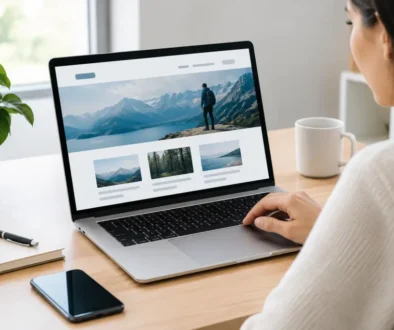
Website Design Services That Generate Enquiries
A potential customer can form an opinion about your business before they read a single service description. If your website looks dated, loads poorly on a mobile, or makes it hard to find a phone number, they may leave and contact a competitor instead. Effective website design services address that moment by giving customers a clear, credible reason to stay, learn more and make contact.
For small and medium-sized businesses, a website is not simply an online brochure. It is the central point where search results, Google Business Profile listings, social media posts, video content and word-of-mouth referrals lead. Every other digital activity works harder when the destination is professionally designed, easy to use and built around what customers need to do next.
What website design services should achieve
A professional website should make it easier for the right people to understand your business and take action. That sounds simple, but it requires more than selecting a template, adding a logo and writing a few paragraphs.
First, the site needs to explain what you do quickly. A visitor should be able to tell whether you provide the service they need, where you operate and why your business is a suitable choice. This is particularly important for trades, health providers, professional services, hospitality venues and local retailers, where customers often compare several businesses in a short period.
Second, the website needs a logical path to enquiry. That may mean a clear contact form, visible phone details, booking options or service-specific calls to action. The best approach depends on the business. A plumber may need prominent emergency contact details, while an accountant may benefit from pages that explain particular services before inviting a consultation.
Third, it must support credibility. Genuine business information, professional imagery, clear service descriptions, testimonials where appropriate and consistent branding all help visitors feel confident. Trust is rarely created by one feature. It is built through dozens of small signals that show the business is established, capable and attentive.
Good design begins before the visual work
Colours, layouts and imagery matter, but they should follow strategy rather than replace it. A website that looks polished yet speaks vaguely about its services will still struggle to produce useful enquiries.
The design process should begin with practical questions: Who is the ideal customer? What problems are they trying to solve? Which services are most valuable to the business? What information do customers ask for before they make contact? The answers shape the page structure, content priorities and user journey.
For an Eltham business serving Melbourne’s north-east, local relevance can also be useful when it genuinely reflects how customers search. Service areas, local knowledge and clear location details can make the site more helpful to people looking for nearby providers. The aim is not to repeat suburb names for the sake of it. It is to provide useful context that helps a customer know they are in the right place.
Custom structure beats a one-size-fits-all approach
A custom website does not need unnecessary features. It needs a structure that reflects the way your business sells and serves customers. A builder may require project galleries and separate pages for renovation, extension and new-build work. A clinic may need practitioner profiles, treatment explanations and clear appointment information. A restaurant may focus on menus, functions, location and opening hours.
Template-led sites can be suitable for very simple needs, but they often encourage businesses to fit their message into a predetermined layout. This can lead to generic headings, crowded pages or key details being buried. Custom website design puts the business objectives first, then creates a layout that supports them.
Mobile usability is business usability
Many customers will first find your website on a mobile while travelling, comparing options after work or responding to a recommendation. On a smaller screen, a cluttered menu, oversized image or hard-to-complete form becomes more than a design issue. It becomes a lost opportunity.
Mobile-friendly design means content is easy to scan, buttons are easy to tap and important details appear without excessive scrolling. It also means considering what mobile visitors are most likely to want: a quick overview, service area information, opening hours, directions or a direct way to enquire.
Content gives the design a commercial purpose
Strong website content answers customer questions in plain language. It should describe services clearly, address common concerns and show what makes the business dependable. Empty claims such as “quality service” or “trusted experts” carry little weight unless the site explains what that looks like in practice.
Useful content may cover your process, qualifications, project experience, product range or the situations in which customers should call. It should be written for real people first, while using relevant service and location language naturally enough for search engines to understand the page.
This is where many websites underperform. They may have an attractive home page but lack dedicated service pages, clear explanations or useful information beyond a short introduction. Search engines and prospective customers both need substance. A well-organised site gives each important service its own place, rather than forcing every message onto one overloaded page.
Website design and visibility work together
A website is the foundation of online visibility, but it does not work in isolation. Search engine optimisation can help the right pages appear for relevant searches. Google Business Profile management and business directory listings can reinforce local business information. Social media, video and content can direct more people back to the site.
Artificial Intelligence Answer Engine Optimisation, or AIO, also supports discoverability as more people use AI-powered search and answer tools to research services. Clear structure, accurate business information and genuinely helpful content give these systems better material to interpret.
These supporting services are most effective when the website is ready to receive visitors. Driving attention to a confusing, outdated or incomplete site wastes effort. By contrast, a professionally designed website provides a reliable destination where campaigns, profiles and search visibility can convert attention into genuine enquiries.
How to assess website design services
Before choosing a provider, focus on the quality of the process as much as the finished visual style. You should be able to understand how your business goals will influence the site, what information will be needed and how the project will be managed.
Look for clear communication about content, page structure, mobile design and the actions visitors should take. Ask whether the site will support future marketing activity, including service-page expansion, search visibility and local business information. A website should not become a constraint the moment the business grows or adds a service.
It is also worth considering who will support the broader digital presence after launch. Working with one provider that understands the website can make it easier to keep branding, content and business details consistent across key channels. NuDesign approaches website design as the central asset, with SEO, AIO, content, video, social media and business listings supporting the performance of that asset.
A website should keep earning its place
Launching a site is a starting point, not a finish line. Businesses change, customer questions evolve and search behaviour shifts. Reviewing service pages, updating images, adding useful content and checking enquiry pathways helps the website remain relevant over time.
The best next step is to look at your current website as a customer would. Can they immediately understand what you offer, why they should trust you and how to contact you? If the answer is not a confident yes, a well-planned website can give your business a clearer and more effective place to grow from.